
Meet the Environmental Sciences Group at RMC—scientists, engineers, GIS specialists and researchers working together to understand and solve real-world environmental challenges through teamwork and innovation.
We are a dedicated group of senior staff and adjunct professors who have been with ESG for a long time and lead the group, as well as mid-career professionals and recent graduates. We are proud to have a gender-balanced team. We foster a flexible, inclusive, and collaborative work environment.
About three-quarters of our staff members are:
The other quarter of ESG members are laboratory staff and graduate students, who primarily do fundamental research.
Staff members who join ESG with a Bachelor’s degree have the option to pursue a Master's degree within ESG. Senior ESG staff also supervise graduate students who are pursuing PhD and second Masters degrees.

ESG is part of the RMC Department of Chemistry and Chemical Engineering. We have physical premises in the main science and engineering building (Sawyer Building), as well as in two buildings elsewhere on campus, and we also have warehouse space for equipment and sample storage.

Over the years - first at Royal Roads in Victoria, and at RMC in Kingston since 1995 - we have broadened our capabilities to become a leader in a wide range of scientific support, applied projects and fundamental research in the environmental field. ESG today includes expertise in contaminated site assessment and remediation; GIS, data management and technical guidance; and field and ecological services
Currently, ESG provides scientific services, advice and management support on diverse environmental topics to multiple federal government departments. For example, our applied projects within the Department of National Defence, which stewards very large tracts of land in Canada, support DND’s overall environmental management efforts as well as the specific environmental management issues at bases around the country.
Dr. Kela Weber has been the director of ESG since Dr. Ken Reimer, who founded ESG, retired in 2016. Dr. Weber is a professor in the RMC Department of Chemistry and Chemical Engineering, specializing in PFAS, contaminated sites and treatment wetlands.
ESG continues to be on the forefront of emerging contaminants work, with strong fundamental research in PFAS analytical and remedial methods, as well as applied projects addressing PFAS assessment and monitoring.
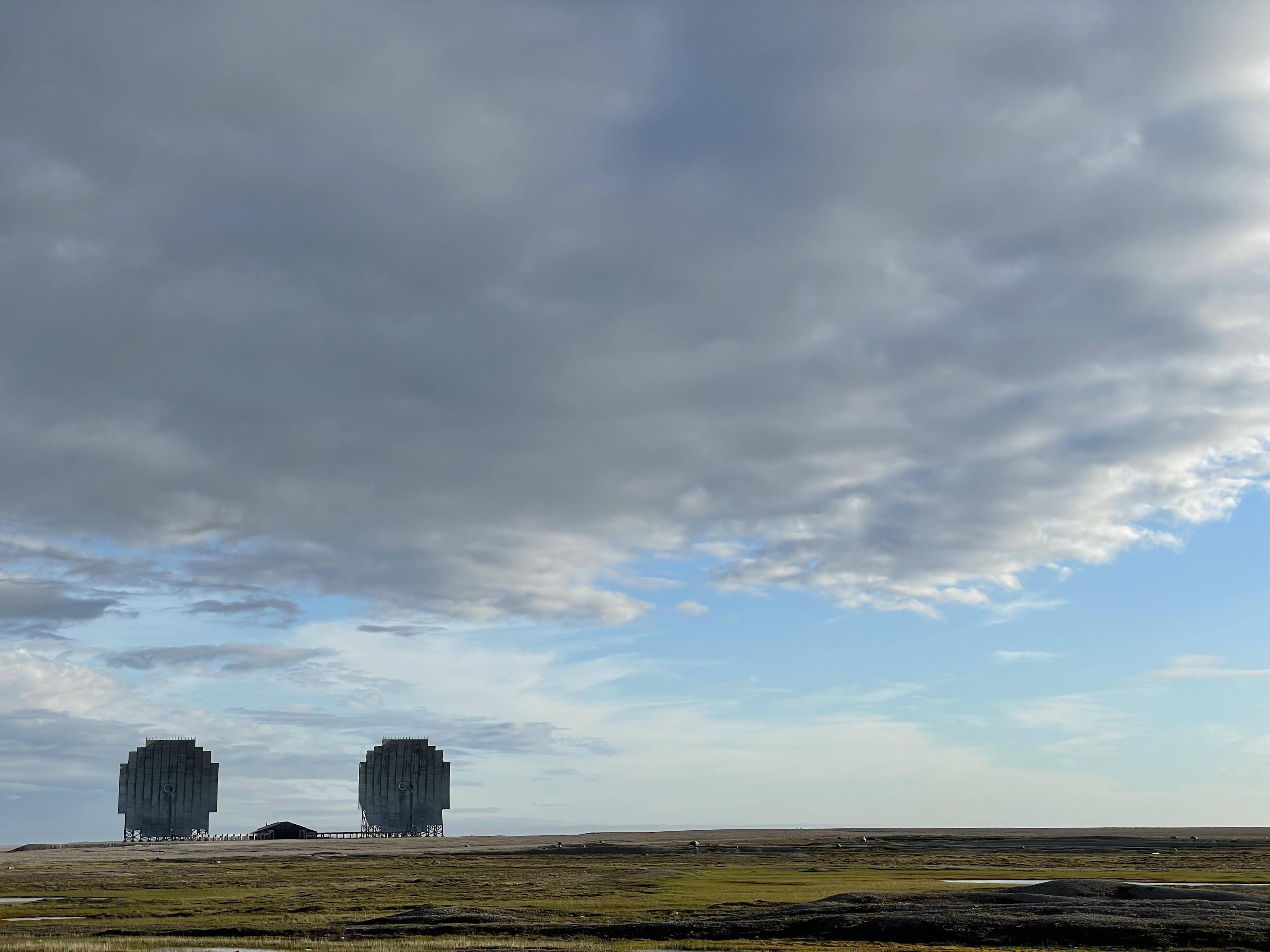
In 1989, as the DEW Line sites were beginning to be closed, the DND North Warning System Office sought an environmental inspection. At that time, the idea of ‘environmental science’ was still quite new.
They approached Dr. Ken Reimer (an arsenic chemistry specialist at the Royal Roads Military College in Victoria BC), who responded by assembling a multi-disciplinary team - which became ESG - to conduct the fundamental research and applied projects required to assess the sites.
That work resulted in the first ever understanding of the environmental impact of radar sites in the Canadian Arctic. It defined threshold levels of lead, as well as PCBs - which were an emerging contaminant at that time - that would be protective of the ecosystem and human health.
The mission of the former DEW Line was to maintain surveillance of North American airspace's northern (Arctic) approaches. It was built in the 1950s as a series of radar stations 80 km apart along the Arctic coast at approximately 70° latitude, from Western Alaska into Greenland. There were 42 sites in Canada, which were closed between 1989 and 1993. Spills and uncontrolled waste disposal occurred while the sites were operational, which created sources of potential environmental impact.
The DEW Line Cleanup project’s goals were to leave the sites in an environmentally safe condition and to prevent contaminants from entering the food chain. Cleanup work began in 1996 and continued until 2014.
At each DEW Line site, ESG conducted detailed environmental site assessments to delineate areas of contamination, working closely with UMA Engineering (now AECOM) who developed the design and specifications for the cleanup work. ESG also participated in consultations with nearby community members.
During cleanup work, ESG provided quality assurance sampling and on-site laboratory operations.

Kingston Ontario, Canada